Guided Implant Surgery in Kothapet, LB Nagar & Uppal, Hyderabad — Computer-Precise. Surgically Safer. Faster Healing.
Traditional implant placement relies on the surgeon's hand and judgement alone. Guided implantology adds a 3D-printed surgical guide that physically directs every drill to the exact planned position. The result: millimetre precision, fewer complications, and faster recovery. Available to patients across Kothapet, LB Nagar, Uppal and surrounding Hyderabad.
The Difference Between "Freehand" and "Guided" Implant Surgery
- Freehand (Traditional)
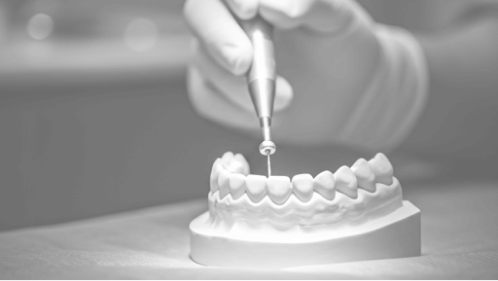
Freehand implant placement is how most clinics still operate. The surgeon estimates the position based on a 2D x-ray and their experience. They drill where they think the implant should go.
This works — but only as well as the surgeon's eye on that day.
- Guided (Precise)
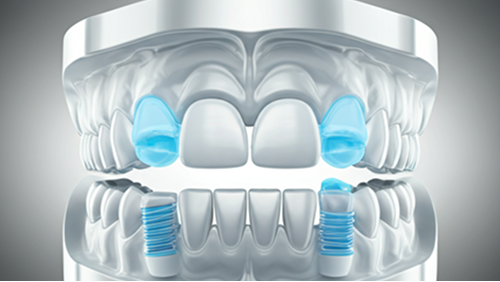
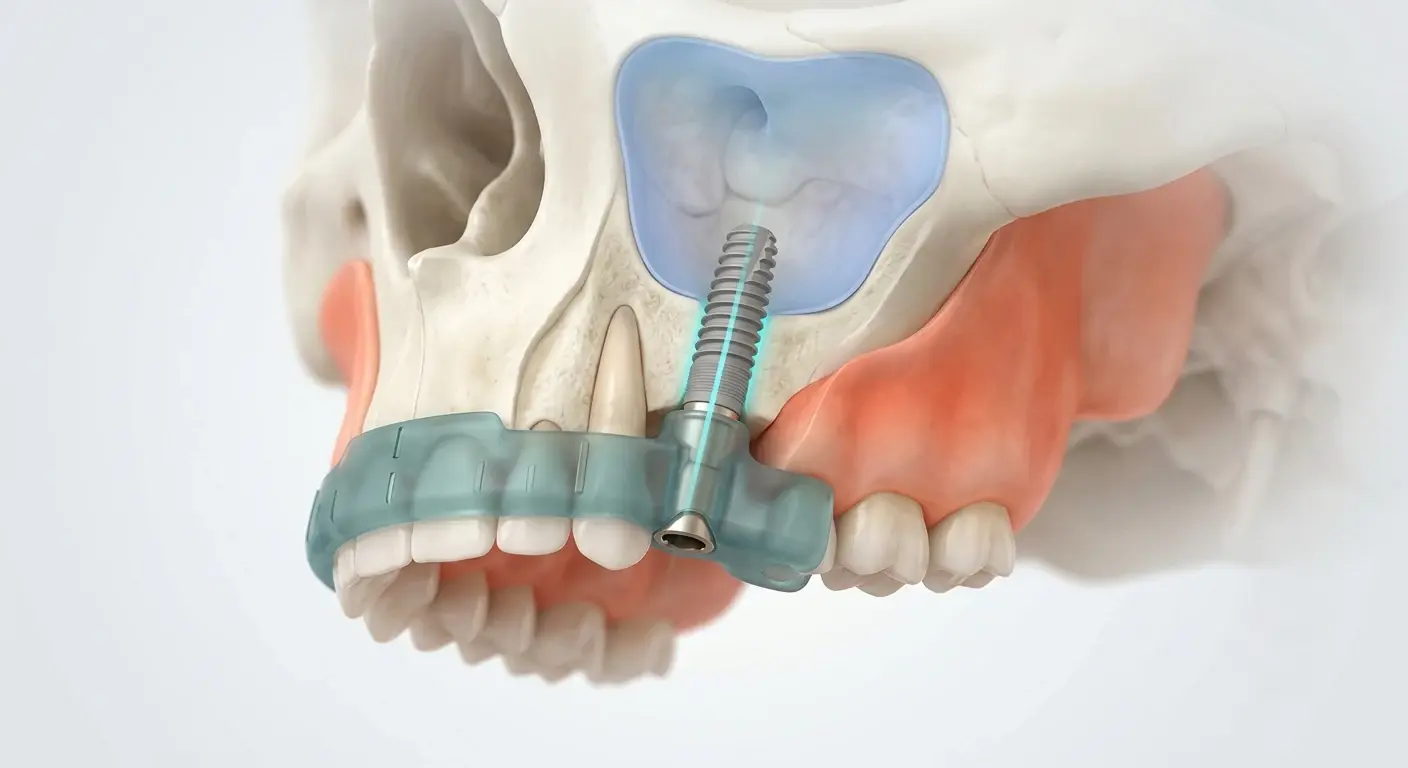
We start with a 3D CBCT scan of your jaw. We plan the exact implant position, angle, and depth on a computer. Then we 3D-print a custom surgical guide — a physical template that fits over your teeth and physically directs the drill to the planned position.
The surgeon doesn't estimate. The guide ensures the implant goes exactly where the plan says. Every time.
Why Guided Surgery Is Safer and Better for Patients
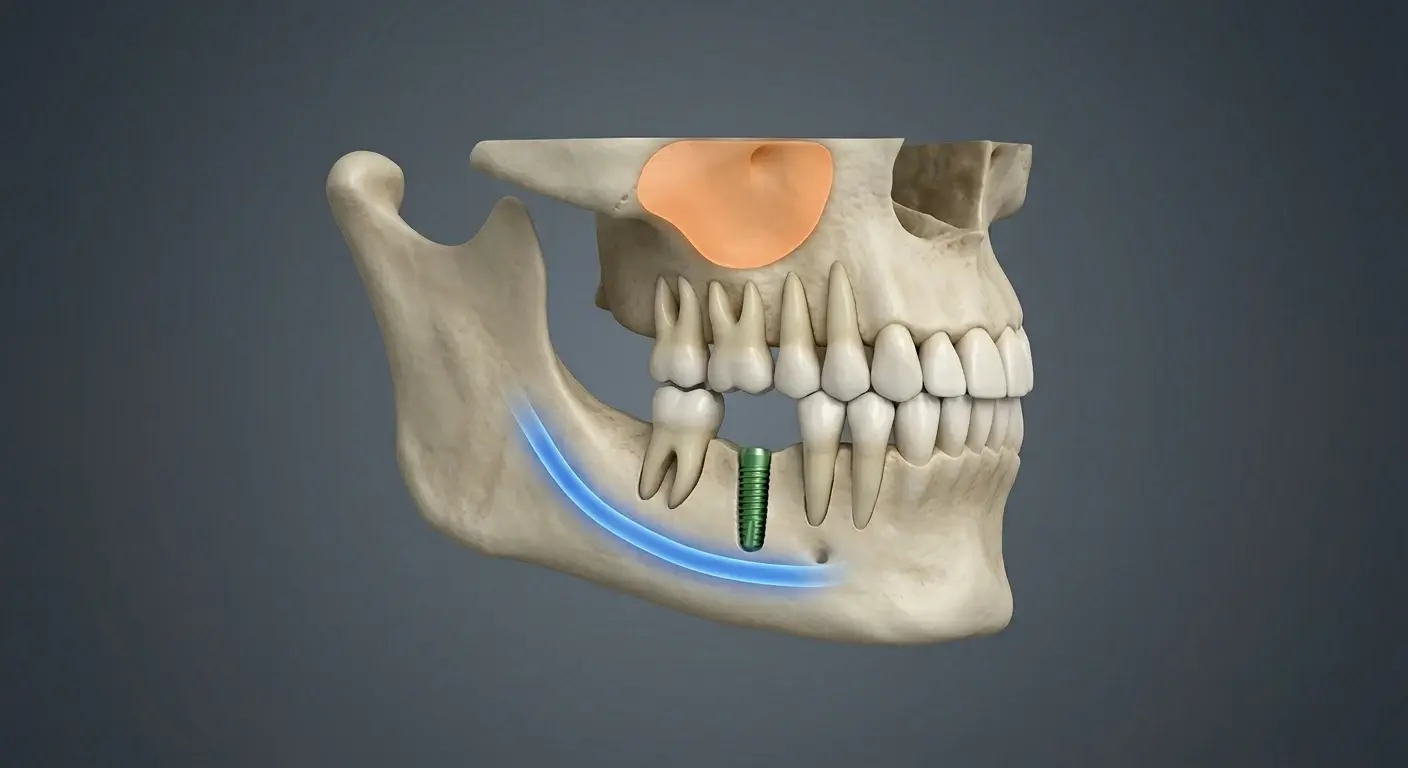
Avoids Critical Anatomy
Your jaw has nerves and sinuses that an implant must avoid. The 3D plan and surgical guide ensure we go around them — not through them. Zero nerve damage. Zero sinus complications. Both common with freehand surgery.
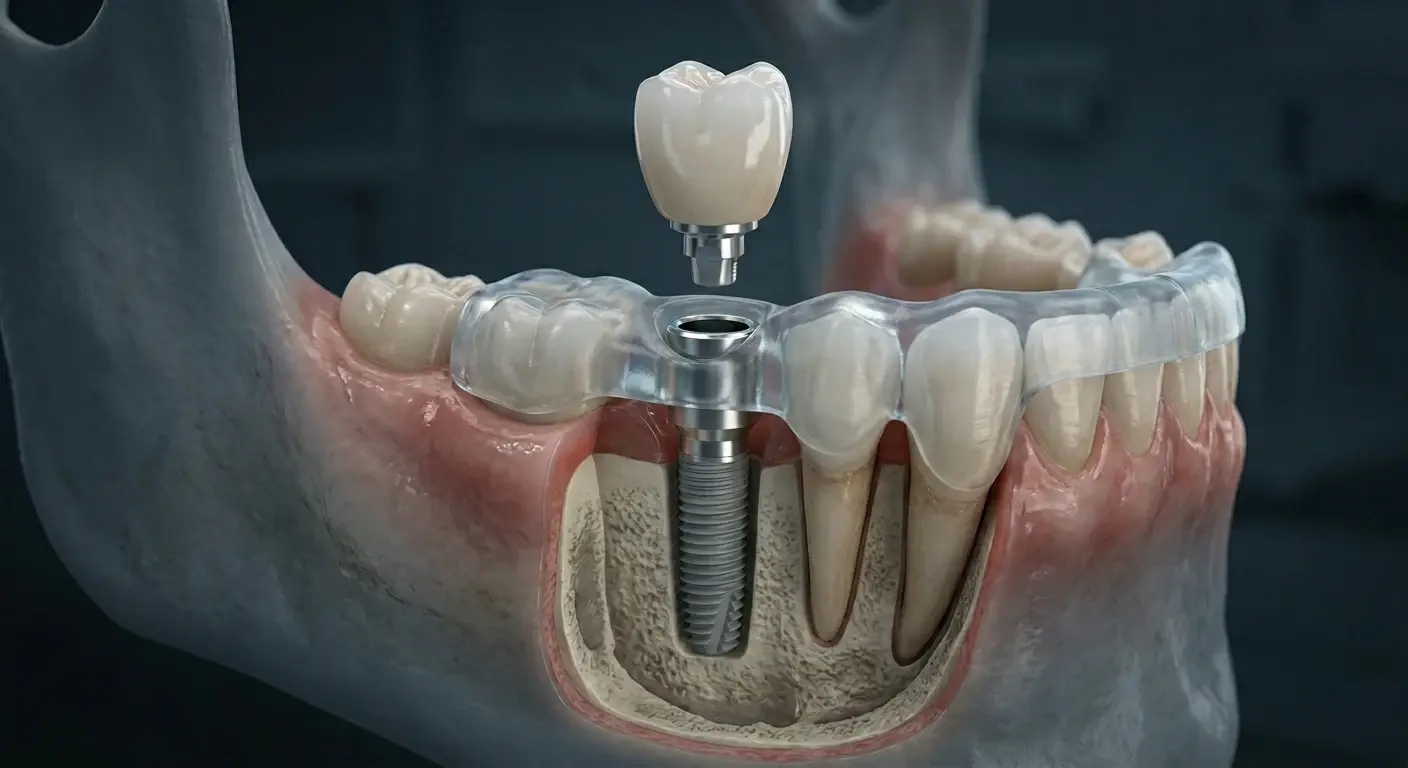
Optimal Implant Position
The implant must be positioned to support the future crown perfectly. Guided surgery places it in the ideal angle and depth for restoration. → Better crown fit, better bite, better aesthetics, longer life.
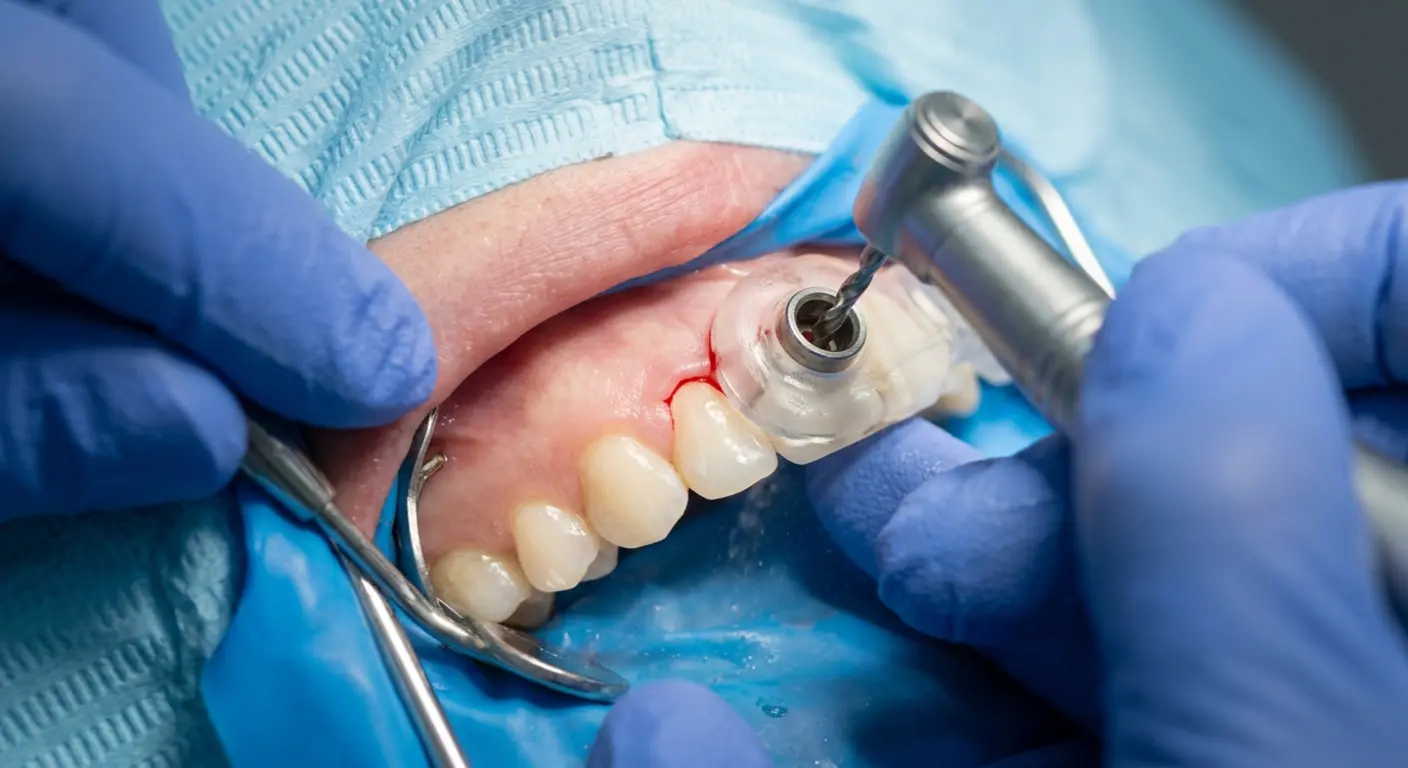
Smaller Incisions, Faster Healing
Because we know the exact position, we don't need large flaps and exploratory cuts. Many guided cases use "flapless" surgery. → Less swelling. Less bleeding. Most patients return to work the next day.
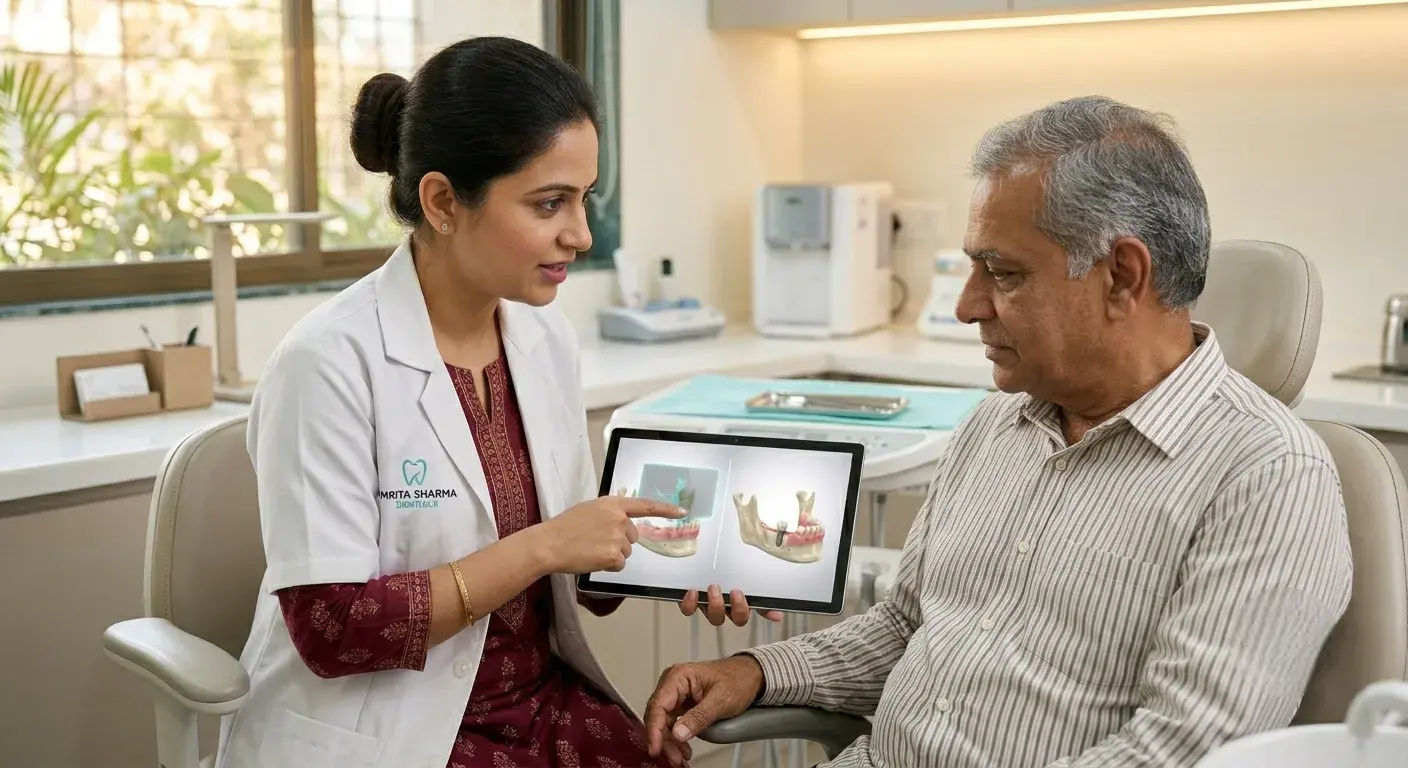
Predictable Outcomes
The surgical plan and the surgical reality match. No "well, we found we had to adjust mid-surgery." What we plan is what you get.
Safer for Complex Cases
Patients with bone loss, sinus proximity, or multiple missing teeth especially benefit. Guided surgery makes complex cases predictable. Patients told "you can't have implants" elsewhere often qualify with guided protocols.
The 5 Stages of Your Guided Implant Procedure
01
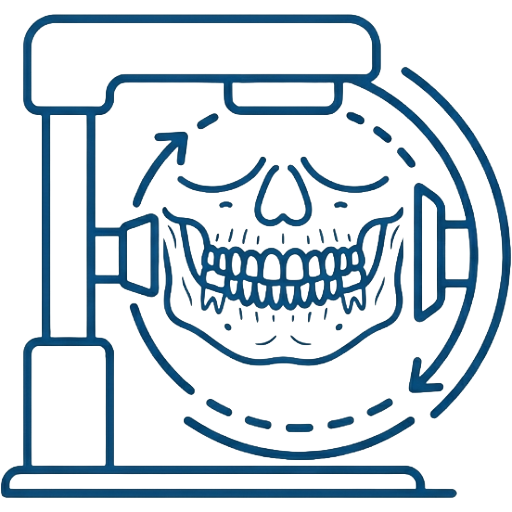
3D CBCT Imaging
We capture a complete 3D image of your jaw, teeth, nerves, and sinuses. This isn't a 2D x-ray — it's a full anatomical map.
02
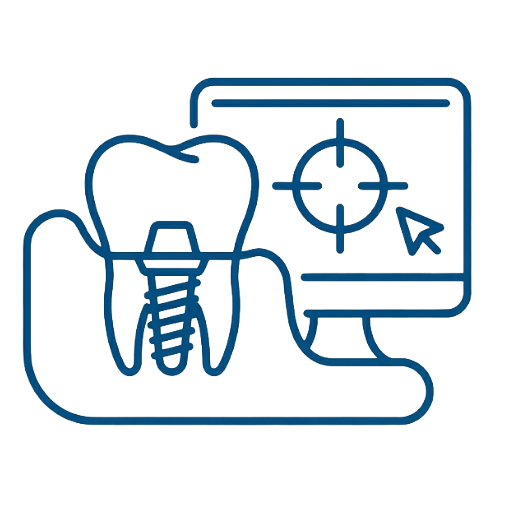
Digital Treatment Planning
Dr. Revath Vyas Devulapally
plans the implant position, angle, and depth on a computer. We virtually "place" the implant and check it from every angle.
03
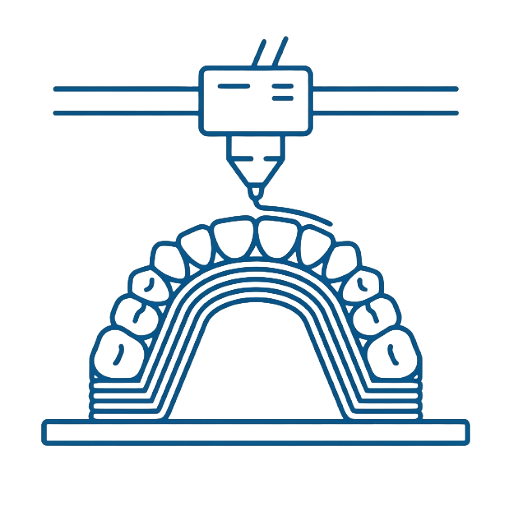
Surgical Guide Fabrication
A custom surgical guide is 3D-printed for your mouth. It includes precise drill sleeves that direct each drill to the planned position.
04
Guided Surgical Placement
On surgery day, the guide fits over your teeth. Drills pass through the sleeves. The implant is placed exactly where it was planned. Surgery is typically 30–45 minutes per implant.
05
Post-Op Verification & Recovery
A post-surgical x-ray confirms perfect placement. You go home with simple aftercare instructions. Most patients are back to normal next day.
Cases Where Guided Surgery Makes the Biggest Difference
Multiple or Full-Arch Implants
When placing 4, 6, or more implants in a single arch, guided surgery is essential. The implants must be parallel and perfectly positioned to support a bridge.
Cases with Bone Loss
Limited bone means limited margin for error. Guided surgery uses every available millimetre of bone safely.
Anxious Patients
Faster surgery, smaller incisions, less unknown. Guided protocols reduce anxiety and recovery time.
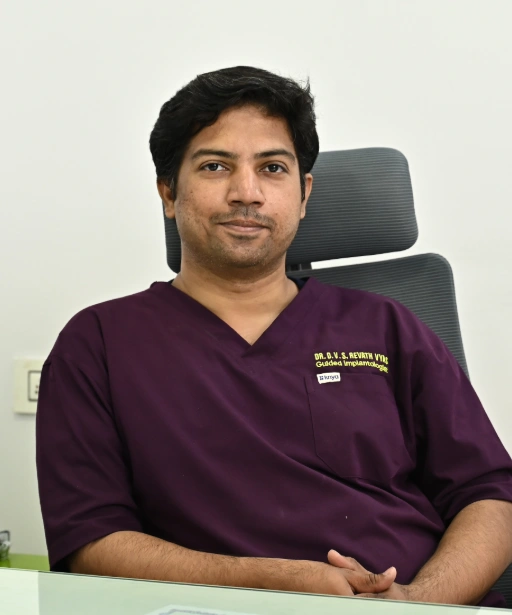
The Specialist Behind Your Guided Surgery
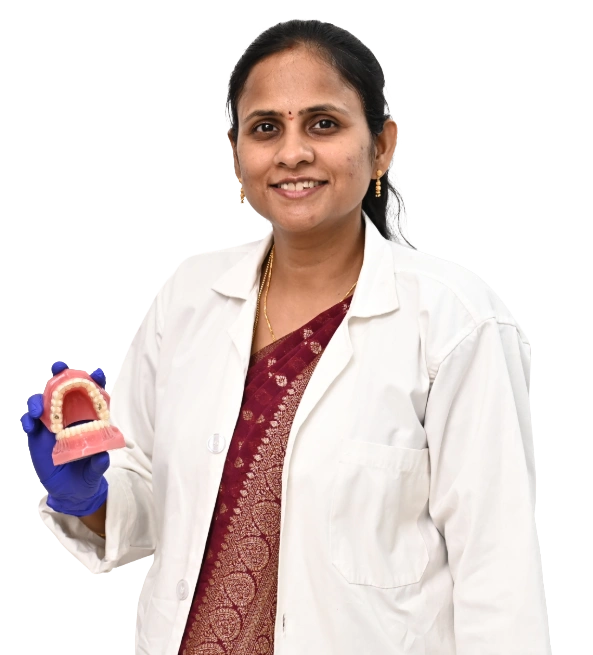
Guided implantology requires two specialties working together: radiology
(to read the 3D scan accurately) and implantology (to plan and place the implant). Dr. Revath is trained in both.
That dual specialty is rare. It means your case is read, planned, and executed by the same expert — not handed off
between three different doctors with potential miscommunications.
CREDENTIALS
MDS Oral Radiologist & Implantologist.
Specialized in Computer-
Guided Surgical Protocols.
Dr. Revath Vyas Devulapally’s specific guided implantology training includes:

3D CBCT-based diagnostic radiology
Digital implant planning software (multiple platforms)
Surgical guide design and fabrication
Complex bone grafting for borderline cases
Full-arch immediate-load protocols
"Freehand implant surgery had its place 20
years ago. Today, with the technology
available, there's no reason a single
implant should ever be placed without 3D
planning."
— Dr. Revath Vyas Devulapally
Common Questions About Guided Implant Surgery
Is guided implant surgery more expensive than freehand?
Slightly — typically 10–15% more, due to the 3D scan and guide fabrication. But the precision pays for itself in fewer complications, faster healing, and longer-lasting implants.
Does guided surgery hurt more or less than traditional implant surgery?
Less. Guided surgery often allows for smaller incisions and "flapless" approaches, meaning less surgical trauma, less swelling, and faster recovery.
How long does guided implant surgery take?
Per implant: typically 30–45 minutes. Multiple implants in one session: 1–2 hours total. Much faster than freehand because there's no exploration or adjustment mid-surgery.
Is the surgical guide reusable?
No — it's custom-made for your specific mouth and surgery. After your procedure, it's discarded. We retain your digital plan permanently.
Can guided surgery be used for any type of implant?
Yes. Single tooth, multiple teeth, full arch, bone-grafted sites — all benefit from guided protocols.
How soon after guided surgery can I eat normally?
Soft foods for 7–10 days. Most patients return to a normal diet within 2 weeks. Full healing (osseointegration) takes 3–6 months — but you have a healing crown or temporary in place during that time.
Implant Surgery Done with the Precision You Deserve
Your free consultation includes clinical exam, treatment options, and discussion of whether guided implantology is right for your case. No obligation. Honest recommendations.